



The Challenge
Blue Light Card is the UK discount platform for the emergency services, NHS, social care, teaching, and armed forces communities. Millions of members, a huge brand footprint, and a commercial model that lives or dies on two things – new member sign ups and members redeeming their offers.
The search landscape it competes in is highly competitive. Discount code SERPs are dominated by aggregators and voucher sites with two decades of accumulated authority. On top of that, AI surfaces now summarise offers before a user ever clicks.
The brand terms were already strong. The commercial opportunity sat in non-brand and the thousands of “[brand] discount code” queries where Blue Light Card had the offers but not the visibility, and in the emerging AI retrieval layer where the aggregators were being cited instead.

AI Ready Approach
The strategy for Blue Light Card is built on a position I have argued publicly all year, at HiveMCR, at Search N Stuff London, and in my published AIR SEO framework – AI search is a layer, not a channel. The retrieval layer that powers AI Overviews, AI Mode, ChatGPT, Perplexity, Gemini, and Claude sits on top of the same foundations that power traditional rankings. Weak foundations produce weak AI visibility. Strong foundations are already a fantastic start for AI search.
So this was never a “GEO” campaign bolted onto an SEO retainer. It is one holistic organic strategy, run through my RARER methodology (Research, Adapt, Refine, Execute, Report), with every deliverable serving traditional search and AI retrieval at the same time. AIR SEO: AI ready, not AI first.
Learn More About AI Ready SEO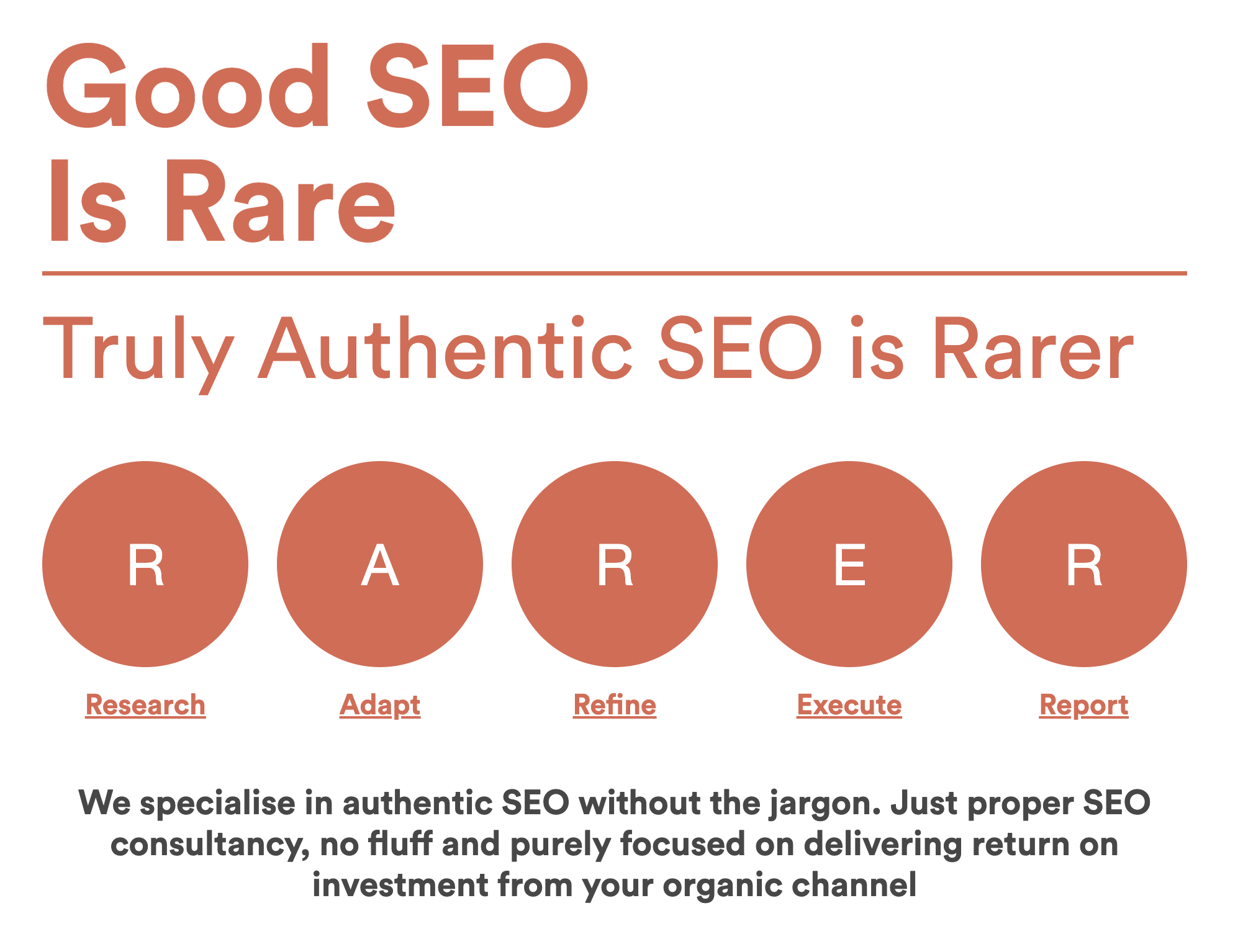
What We Did
Six months of delivery, mapped to the RARER methodology. Every technique below is steeped in SEO, but AI Ready. What changed is the lens – each one was specified, briefed and QA’d for extractability and retrieval as well as rankings.
Research
- Full keyword universe and search intent classification across the discount code sector, brand and non-brand.
- AI search audits across the priority commercial pages, surfacing five recurring site wide gaps. Structured offer hubs, freshness and verification cues, redemption process blocks, a community and social proof layer, and enhanced audience clarity were key recommendations.
- Fan-out query analysis and People Also Ask gap analysis, so briefs target the question space AI systems expand into as well as head SEO terms.
- Keyword cannibalisation audit to protect embeddings and stop commercial pages competing with each other.
Adapt
- Comprehensive structured data and schema audit, including MobileApplication schema for entity disambiguation, and Speakable nested within FAQPage across homepage, brand, and category pages. Specified for knowledge graph and AI retrieval value, with honest caveats where no rich result exists.
- A full site architecture and internal linking strategy. Crawls showed flat site architecture, orphaned pages and commercial URLs carrying a single internal link. We delivered a hub-by-hub review with spoke sub-category recommendations per hub, three proposed new master categories (Travel & Transport, Health & Wellbeing Services, Supermarkets & Groceries), and a Link Source Plan wiring current and proposed pages together.
- Index hygiene and crawl efficiency recommendations, treating internal PageRank and clean extraction as essentials rather than “nice to haves”.
Refine
- A rolling 2026 content programme mapped week by week to customer moments, customer mindset, and trending search demand. 62 pieces planned across 50 commercial landing pages and 12 editorial articles, with 40 full hybrid AIR SEO briefs delivered to date.
- Every brief combines classic on-page SEO with fan-out themes, E-E-A-T implementation, direct-answer leads, and self-contained extractable passages. A standardised, repeatable discount page template underneath. We prioritised clear offer statements up top, eligibility, redemption steps, freshness cues, and FAQ coverage. But crucially, we maintained human led refinement throughout the process, this layer is the bit you cannot fake with AI.
- Honest content positioning against low trust aggregators, for example addressing the absence of a traditional promo code head on and positioning the verified member route as the genuine saving.
Execute
- SEO and AI search treated as one implementation stream. No duplicated effort, no siloed strategies.
- Blog template developer recommendations with SEO, E-E-A-T and LLMs in mind.
- Consultancy on proposed automation projects, supportive of scale, with hard requirements on human review, the AIR SEO brief as the mandatory input to every generated page, cannibalisation control, and genuine template variation so pages stay people-first.
Report
- Monthly performance comms built for the client’s Looker Studio stack, always tied back to sign ups and revenue.
- LLM referral traffic stood up as the primary AI KPI, over citation vanity metrics. Supporting AI share of voice tracking used directionally, not as a target.
- Reporting framed for the zero-click reality (the Crocodile Effect, impressions rising while clicks flatten), so brand value without clicks is captured rather than read as decline.
- Reporting that generates the next move, not just the review. Monthly keyword and demand analysis surfaced the carers opportunity (a 90,500 monthly search head term with demand up 308% year on year), which is already scheduled on the content planner, flagged coordinated cluster declines for investigation, and confirmed post core update recoveries the following month.

Visibility Across All Organic Search Surfaces
The thesis was that the same work would impact the AI retrieval layer. It did, and the timing is the evidence. LLM referral growth tracked the non-brand SEO curve, not a separate “GEO” workstream, because there wasn’t one.
Share of the AI answer layer
- Blue Light Card now ranks #1 for AI share of voice across every monitored prompt set, with share of voice between 53% and 70% depending on the prompt group and an average position of 1.2 to 1.6.
- At keyword level, the dominance sits exactly where the volume is: #1 with 70% share of voice on “nhs discounts” (331,000 monthly searches) and #1 on “emergency service discounts”. The only consistent challenger is a single competitor, and the gap on the broad set is comfortable (53% vs 39%). Everyone else in the answer space is a retailer, not a discount platform.
- 68% of roughly 1,000 tracked AI Overview appearances sit in the top three positions. Eligibility and brand terms are the moat (117 appearances at an average position of 1.6), with travel, fashion, days out, and home and garden the strongest partner verticals behind them.
And it drives traffic that converts
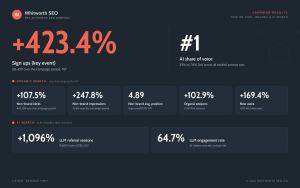
- LLM referral sessions in June 2026 were up 1,096.3% year on year. New users up 1,805.1% and Key events up 853.8%
- Engagement rate from AI referrals of 64.7%, ahead of most traditional channels.
- ChatGPT is the dominant source with Brave, Copilot, Perplexity, Gemini, Kagi, and Claude making up the long tail.
- Share of voice and citation tracking are used to steer the strategy, but referral traffic and key events remain the KPI.

The Proof
- AI search is a layer, not a channel. One holistic AIR SEO strategy outperformed the idea of a separate GEO workstream, in a sector truly exposed to AI summarisation.
- SEO fundamentals drive AI visibility. Schema, architecture, extractable content, and E-E-A-T took Blue Light Card to #1 for AI share of voice on the highest volume terms in the category, with no separate GEO spend.
- Revenue is the KPI. Sign ups up 423.4% year on year is the headline, not citation counts.
- The techniques are alive. Every one of them was sound SEO before LLMs arrived. The post-AI era just raised the prize for doing them properly.
| Long live SEO. |
The campaign at a glance
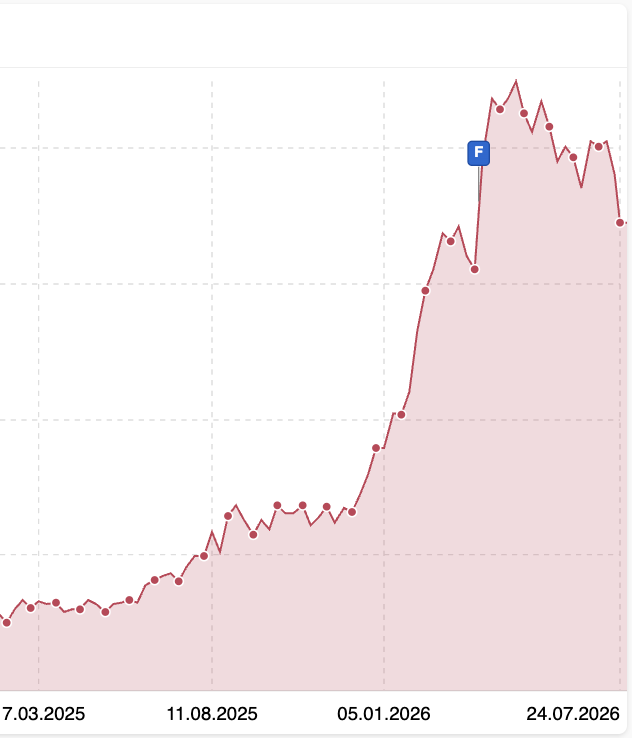
Figures below are from Google Search Console and GA4, comparing the campaign period year on year (five-year GSC view, annotated at campaign start) with June 2026 as the latest full month.
"One holistic organic strategy. No separate GEO channel, no bolt-on AI upsell. SEO fundamentals, made AI ready, measured on sign ups and revenue."